In a recent service, Oxford Unitarians focused on Joseph Priestley (1733 –1804), an English theologian, dissenting clergyman, philosopher, scientist, educator, and liberal political thinker who published over one hundred and fifty works. He is usually credited with the discovery of oxygen, having isolated it in it's gaseous state, although Scheele and Lavoisier also have a claim to the discovery.

Joseph also invented soda water and wrote about electricity. But it is his life, theology and politics that grab my attention. He strongly believed in the free and open exchange of ideas, advocated tolerance and equal rights for religious Dissenters. In the eighteenth century this term was used for anyone who dared not to be an Anglican.
Joseph Priestley was instrumental in founding our wonderful Unitarian creed. ' Whoever you are, wherever you come from and whatever you believe, you are welcome here.' Because of his views he suffered discrimination and intolerance. It is depressing to consider that these things still happen.
Joseph was born to an established dissenting family who lived near Batley in Yorkshire. It became apparent that he was intelligent and he was given a good, broad based education. He
was tutored by the Reverend George Haggerstone, who first introduced
him to higher mathematics, philosophy, logic and physics.
Around 1749, Joseph became seriously ill and believed he was dying. His illness left him with a permanent stutter and he gave up any thoughts of entering the ministry at that stage. In preparation for joining a relative in trade in Lisbon, he studied French, Italian, German and Arabic.
Joseph eventually decided to return to his theological studies and, in 1752, matriculated at Daventry, a Dissenting academy. The liberal atmosphere of the school, shifted his theology further leftward and he became a Rational Dissenter, thus abhoring dogma and religious mysticism, while emphasising the rational analysis of the natural world and the Bible.
Joseph's first "call" in 1755 was to the Dissenting parish in Needham Market, Suffolk. This was a bad move for both himself and the congregation. He yearned for urban life and theological debate, but Needham Market was a small, rural town with a conservative congregation. Attendance and donations dropped sharply when they discovered the extent of his heterodoxy. Joseph's Daventry friends helped him obtain another position and in 1758 he moved to Nantwich. His time there was happier. The congregation was less concerned about his heterodoxy and he successfully established a school. Unlike many schoolmasters of the time, he taught his students philosophy and science . Appalled at the quality of the available English grammar books, Joseph wrote his own: 'The Rudiments of English Grammar' (1761). This received much acclaim. He was forward thinking and understood the need to move away from Latin. These successes led Warrington Academy to offer him a teaching position in 1761.
Warrington in those days was an intellectual powerhouse known as the 'Athens of the North', believe it or not! Joseph remained there until 1767, teaching modern languages. He fitted in well at Warrington, and made friends quickly. On 23 June 1762, he married Mary Wilkinson. The marriage proved to be very happy.
Joseph argued that the education of the young should anticipate their future practical needs. This principle of utility guided his unconventional curricular choices for Warrington's aspiring middle-class students. He recommended modern languages instead of classical languages and modern rather than ancient history. He also promoted the education of middle-class women, which was unusual at the time. Some scholars of education have described Joseph Priestley as the most important English writer on education between the seventeenth and the nineteenth centuries.
In 1773, Joseph became a political adviser to Lord Shelburne, gathering information on parliamentary issues and serving as a liaison between Shelburne and the Dissenting and American interests.
When Joseph's friend Theophilus Lindsey decided to found a new Christian denomination that would not restrict its members' beliefs, Joseph and others hurried to his aid. On 17 April 1774, Lindsey held the first Unitarian service in Britain, at the newly formed Essex Street Chapel in London. Joseph attended Lindsey's church regularly in the 1770s and occasionally preached there. He continued to support Unitarianism for the rest of his life, writing several Defenses of Unitarianism and encouraging the foundation of new Unitarian chapels throughout Britain and the United States.
Around 1779 Joseph and Shelburne had a fall out. The most likely reason was Shelburne's recent marriage to Louisa Fitzpatrick who did not like the Priestleys, who thus moved on to Birmingham. The Priestley and Shelburne families upheld their Unitarian faith for generations, into the twentieth century. Joseph and his family spent a happy decade in the Midlands until they were forced to flee in 1791 by religiously motivated mob violence in what became known as the Priestley or Birmingham Riots. More later. Joseph had accepted the ministerial position on the condition that he be required to preach and teach only on Sundays, so that he would have time for his writing and scientific experiments. As in Leeds, he established classes for the youth of his parish and by 1781, he was teaching one hundred and fifty students.
Although Joseph continued his scientific persuits, most of what he published in Birmingham was theological. He thought the teachings of the early Christian church had been "corrupted" or distorted. He addressed issues ranging from the divinity of Christ to the proper form for the Lord's Supper. Although a few readers such as Thomas Jefferson and other Rational Dissenters approved of the work, it was harshly reviewed because of its extreme theological positions, particularly its rejection of the Trinity.
In 1785 claiming that the Reformation had not really reformed the church, Joseph challenged his readers to enact change:
Although Joseph continued his scientific persuits, most of what he published in Birmingham was theological. He thought the teachings of the early Christian church had been "corrupted" or distorted. He addressed issues ranging from the divinity of Christ to the proper form for the Lord's Supper. Although a few readers such as Thomas Jefferson and other Rational Dissenters approved of the work, it was harshly reviewed because of its extreme theological positions, particularly its rejection of the Trinity.
In 1785 claiming that the Reformation had not really reformed the church, Joseph challenged his readers to enact change:
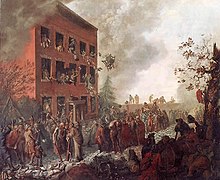
The attack on the Priestley's home, Fairhill, Sparkbrook, Birmingham
The animosity that had been building against Dissenters and supporters of the American and French Revolutions exploded in July 1791. Joseph Priestley and several other Dissenters had arranged to have a celebratory dinner on the anniversary of the storming of the Bastille, a provocative action in a country where many disapproved of the French Revolution and feared that it might spread to Britain. Amid fears of violence, Joseph was convinced by his friends not to attend. Rioters gathered outside the hotel during the banquet and attacked the attendees as they left. The rioters moved on to the Unitarian churches and burned them to the ground. The mob torched the Priestleys' house, destroying the valuable laboratory and all of the family's belongings. Twenty-six other Dissenters’ homes and three more churches were burned in the three-day riot. Joseph spent several days hiding with friends until he was able to travel safely to London. The carefully executed attacks of the mob and the farcical trials of only a handful of the "leaders" convinced many at the time, and modern historians later, that the attacks were planned and condoned by local Birmingham magistrates. When George III was eventually forced to send troops to the area, he said: "I cannot but feel better pleased that Priestley is the sufferer for the doctrines he and his party have instilled, and that the people see them in their true light." Disgraceful, in my view.
Unable to return to Birmingham, the Priestley family eventually settled in Middlesex at the Dissentimg Academy. Friends helped the couple rebuild their lives, contributing money, books, and laboratory equipment. Joseph tried to obtain restitution from the government for the destruction of his Birmingham property, but he was never fully reimbursed.
Daily life became more difficult for the family: Joseph was burned in effigy; vicious political cartoons continued to be published about him; letters were sent to him from across the country, comparing him to the devil and Guy Fawkes; tradespeople feared the family's business; and his Royal Academy friends distanced themselves. As the penalties became harsher for those who spoke out against the government, Joseph examined options for removing himself and his family from England. His son William was presented to the French Assembly and granted letters of naturalization on 8 June 1792. A decree of 26 August 1792 by the French National Assembly conferred French citizenship on Joseph Priestley and others who had "served the cause of liberty" by their writings. He accepted French citizenship, considering it "the greatest of honours".
As relations between England and France worsened, however, a removal to France became impracticable. Following the declaration of war of February 1793, and the Aliens Bill of March 1793, which forbade correspondence or travel between England and France, William Priestley left France for America. Joseph Priestley's sons Harry and Joseph chose to leave England for America in August 1793. Finally Joseph himself followed with his wife, boarding the Sansom at Gravesend on 7 April 1793. Five weeks after Priestley left, William Pitt's administration began arresting radicals for seditious libel, resulting in the famous 1794 Treason Trials.

The attack on the Priestley's home, Fairhill, Sparkbrook, Birmingham
The animosity that had been building against Dissenters and supporters of the American and French Revolutions exploded in July 1791. Joseph Priestley and several other Dissenters had arranged to have a celebratory dinner on the anniversary of the storming of the Bastille, a provocative action in a country where many disapproved of the French Revolution and feared that it might spread to Britain. Amid fears of violence, Joseph was convinced by his friends not to attend. Rioters gathered outside the hotel during the banquet and attacked the attendees as they left. The rioters moved on to the Unitarian churches and burned them to the ground. The mob torched the Priestleys' house, destroying the valuable laboratory and all of the family's belongings. Twenty-six other Dissenters’ homes and three more churches were burned in the three-day riot. Joseph spent several days hiding with friends until he was able to travel safely to London. The carefully executed attacks of the mob and the farcical trials of only a handful of the "leaders" convinced many at the time, and modern historians later, that the attacks were planned and condoned by local Birmingham magistrates. When George III was eventually forced to send troops to the area, he said: "I cannot but feel better pleased that Priestley is the sufferer for the doctrines he and his party have instilled, and that the people see them in their true light." Disgraceful, in my view.
Unable to return to Birmingham, the Priestley family eventually settled in Middlesex at the Dissentimg Academy. Friends helped the couple rebuild their lives, contributing money, books, and laboratory equipment. Joseph tried to obtain restitution from the government for the destruction of his Birmingham property, but he was never fully reimbursed.
Daily life became more difficult for the family: Joseph was burned in effigy; vicious political cartoons continued to be published about him; letters were sent to him from across the country, comparing him to the devil and Guy Fawkes; tradespeople feared the family's business; and his Royal Academy friends distanced themselves. As the penalties became harsher for those who spoke out against the government, Joseph examined options for removing himself and his family from England. His son William was presented to the French Assembly and granted letters of naturalization on 8 June 1792. A decree of 26 August 1792 by the French National Assembly conferred French citizenship on Joseph Priestley and others who had "served the cause of liberty" by their writings. He accepted French citizenship, considering it "the greatest of honours".
As relations between England and France worsened, however, a removal to France became impracticable. Following the declaration of war of February 1793, and the Aliens Bill of March 1793, which forbade correspondence or travel between England and France, William Priestley left France for America. Joseph Priestley's sons Harry and Joseph chose to leave England for America in August 1793. Finally Joseph himself followed with his wife, boarding the Sansom at Gravesend on 7 April 1793. Five weeks after Priestley left, William Pitt's administration began arresting radicals for seditious libel, resulting in the famous 1794 Treason Trials.
Unable to return to Birmingham, the Priestley family eventually settled in Middlesex at the Dissentimg Academy. Friends helped the couple rebuild their lives, contributing money, books, and laboratory equipment. Joseph tried to obtain restitution from the government for the destruction of his Birmingham property, but he was never fully reimbursed.
Daily life became more difficult for the family: Joseph was burned in effigy; vicious political cartoons continued to be published about him; letters were sent to him from across the country, comparing him to the devil and Guy Fawkes; tradespeople feared the family's business; and his Royal Academy friends distanced themselves. As the penalties became harsher for those who spoke out against the government, Joseph examined options for removing himself and his family from England. His son William was presented to the French Assembly and granted letters of naturalization on 8 June 1792. A decree of 26 August 1792 by the French National Assembly conferred French citizenship on Joseph Priestley and others who had "served the cause of liberty" by their writings. He accepted French citizenship, considering it "the greatest of honours".
As relations between England and France worsened, however, a removal to France became impracticable. Following the declaration of war of February 1793, and the Aliens Bill of March 1793, which forbade correspondence or travel between England and France, William Priestley left France for America. Joseph Priestley's sons Harry and Joseph chose to leave England for America in August 1793. Finally Joseph himself followed with his wife, boarding the Sansom at Gravesend on 7 April 1793. Five weeks after Priestley left, William Pitt's administration began arresting radicals for seditious libel, resulting in the famous 1794 Treason Trials.
The Priestleys arrived in New York City in 1794 and moved on to Pennsylvania, trying to avoid political discord in this new country. The sons bought land and prospered. Mary Priestley died on 17 September 1796. Joseph now moved in with his elder son, Joseph Jr., and wife Elizabeth Ryland-Priestley. Since his arrival in America he had continued to defend his Unitarian beliefs and was unable to avoid becoming embroiled in political controversy.
The Priestleys arrived in New York City in 1794 and moved on to Pennsylvania, trying to avoid political discord in this new country. The sons bought land and prospered. Mary Priestley died on 17 September 1796. Joseph now moved in with his elder son, Joseph Jr., and wife Elizabeth Ryland-Priestley. Since his arrival in America he had continued to defend his Unitarian beliefs and was unable to avoid becoming embroiled in political controversy.
By the time he died in 1804, Joseph Priestley had been made a member of every major scientific society in the Western world and he had discovered numerous substances. He had published more than one hundred and fifty works on topics ranging from political philosophy to education to theology to natural philosophy. He led and inspired British radicals during the 1790s, and helped found Unitarianism.
Joseph Priestley is described as a conservative and dogmatic scientist who was nevertheless a political and religious reformer. It is the latter on which I have focussed. I attended the service about Joseph around the time I saw the Film 'Trumbo' about a communist mid twentieth century Hollywood script writer. There are similarites between the way Trumbo and Priestley were treated: visitmised and ostracised.
May we progress.
This globe in the library of Harris Manchester College, Oxford, once belonged to Joseph Priestley.
By the time he died in 1804, Joseph Priestley had been made a member of every major scientific society in the Western world and he had discovered numerous substances. He had published more than one hundred and fifty works on topics ranging from political philosophy to education to theology to natural philosophy. He led and inspired British radicals during the 1790s, and helped found Unitarianism.
Joseph Priestley is described as a conservative and dogmatic scientist who was nevertheless a political and religious reformer. It is the latter on which I have focussed. I attended the service about Joseph around the time I saw the Film 'Trumbo' about a communist mid twentieth century Hollywood script writer. There are similarites between the way Trumbo and Priestley were treated: visitmised and ostracised.
Joseph Priestley is described as a conservative and dogmatic scientist who was nevertheless a political and religious reformer. It is the latter on which I have focussed. I attended the service about Joseph around the time I saw the Film 'Trumbo' about a communist mid twentieth century Hollywood script writer. There are similarites between the way Trumbo and Priestley were treated: visitmised and ostracised.
May we progress.
This globe in the library of Harris Manchester College, Oxford, once belonged to Joseph Priestley.

I
I


No comments:
Post a Comment